
The Indian markets have delivered high long-term returns, second only to the US.

FIIs' net outflows have been Rs 47,706.2 crore (Rs 477.06 billion) till March 30 in the financial year 2008-09 as against huge inflows of Rs 53,000 crore (Rs 530 billion) in the previous fiscal, according to latest information on the Securities and Exchange Board of India website.

According to the global financial services major, FII flows in May were mixed, with investors being more selective.

Among the Sensex firms, Wipro, HCL Technologies, NTPC, Reliance Industries, Infosys, IndusInd Bank, Tech Mahindra and Tata Consultancy Services were the major laggards. IT stocks fell on profit-taking after rallying sharply in the past two sessions. Tata Steel, Titan, Maruti, Larsen & Toubro, ITC and JSW Steel were among the gainers.

'We continue to view India as a standout within EM.'

India gains at the expense of Russia and Brazil

'In the overall global portfolio, India's weighting has come down in the past seven months.'

India's stock markets corrected recently but foreign money is likely to chase China rather than India in the short-to-medium term, said Chris Wood, global head of equity strategy at Jefferies, on Thursday. Wood told the Business Standard Manthan Summit in New Delhi he is bullish about Indian equities from a long-term perspective, but for the short term he is cautious given the quantum of foreign investor (FII) outflows and valuation woes.

Among the Sensex firms, Adani Enterprises and Adani Ports sustained their gaining momentum and traded higher by 4.40 per cent and 4.37 per cent, respectively. BPCL, Axis Bank, Mahindra & Mahindra and SBI were the other major gainers. On the other hand, HCL Tech, Infosys and Bajaj Auto traded in the negative zone with a loss of up to 1.54 per cent.

India attracted $1.4 billion FIIs in November, says a report by HSBC.

Experts say a turnaround may happen after the general elections.

Raising concern about over-dependence of Indian capital markets on foreign institutional investors, eminent banker Deepak Parekh has said that something needs to be done to change this pattern.

Investors' wealth eroded by Rs 3.46 lakh crore on Wednesday as equity markets took a sharp tumble amid weak global trends and foreign fund outflows. The 30-share BSE Sensex fell by 676.53 points or 1.02 per cent to settle at 65,782.78. During the day, it plunged 1,027.63 points or 1.54 per cent to 65,431.68. In line with the weak trend in equities, the market capitalisation of BSE-listed firms eroded by Rs 3,46,947.54 crore to Rs 3,03,33,258.69 crore.

'We have relatively strong growth and a healthy corporate earnings cycle as positives, but a worrisome current account deficit and high inflation as challenges.'

A delay in US Federal Reserve's quantitative easing tapering, coupled with better-than-expected September quarter earnings, ensured FIIs kept foreign money flowing into Indian equities.

Domestic equity markets, which are at record high levels, will be driven by quarterly earnings, global trends and foreign fund movement, analysts said. The movement of rupee and global oil benchmark Brent crude will also be tracked by investors. "The direction of global stock markets, fluctuations in the rupee-to-dollar exchange rate, and movement in crude oil prices will all play a crucial role in influencing the overall market trend.

Quarterly earnings of corporates, trading activity of foreign investors and inflation data are the key factors that are expected to drive the momentum in the equity markets this week, analysts said.

Mutual funds (MFs) invested a record Rs 1.73 trillion in equities in the financial year 2022-23 (FY23), providing strong support to the Indian markets at a time when foreign investors were redeeming their holdings. They exceeded the previous high of nearly Rs 1.72 trillion investment in equities in FY22. The data from the Securities and Exchange Board of India (Sebi) shows MFs were net buyers in the equity market in eleven of the twelve months last financial year.

Monetary policy stance to depend on inflation data

Stock markets will be largely driven by global trends in the absence of any major domestic triggers this week, say analysts. The trading activity of foreign investors, global crude oil prices and rupee-dollar movement will also influence market movement, they said. "Anticipating a period of consolidation in the absence of clear global cues, the market's trajectory will likely hinge on the movement of the US bond yields, the dollar index, and crude oil prices, as well as institutional flows.

Does away with much of auction process in this market and reinvestment checks

Besides foreign flows, corporate earnings and US Federal Reserve chief Janet Yellen's testimony to the nation's legislature are also likely to impact investor sentiment.

'It is unlikely that foreign portfolio investors (FPIs) might increase their India allocation, given the overweight status for most FPIs.' 'Given the commentary from the Republican Party, an anti-imports approach means money will not flow out of the US.'

Benchmark equity indices Sensex and Nifty ended lower on Monday after hitting their all-time high levels in early trade amid selling in blue-chip IT stocks and HDFC Bank. After breaching the 77,000-mark during the early trade, the 30-share BSE Sensex came under selling pressure at the fag-end of the session and ended 203.28 points or 0.27 per cent lower at 76,490.08. During the day, the benchmark jumped 385.68 points or 0.50 per cent to hit a new record of 77,079.04.

State Bank of India, Adani Ports, Tata Consultancy Services, ICICI Bank, Reliance Industries and PowerGrid were also among the laggards.

The yield on the 10-year bond may fall to 8.70 per cent due to FII flows in debt.

According to the global financial services major, FIIs have recouped around 25 per cent of the outflows seen over the June-August period, when the country witnessed its sharpest bout of FII outflows since the global financial crisis.

This was the fifth consecutive quarter when the Indian markets have seen positive flows from FIIs.
Domestic quarterly earnings, global trends and foreign fund trading activity would dictate the movement in equity markets, which may face volatility amid the scheduled monthly derivatives expiry this week, analysts said. Equity markets took a breather last week. The BSE Sensex declined 298.22 points or 0.48 per cent and the Nifty dipped 111.4 points or 0.60 per cent.

Market experts believe the retreat is because of uncertainty.

'If individual stocks start falling 25% to 30% or more, then I doubt how many of them will be able to withstand that (kind of selloff). That is when you'll see panic coming in.'

Deutsche Bank expects the Sensex to climb only 8% in 2017 to 29,000, and expects high volatility.

The policymaker said the RBI had not reached the point where specific actions were under consideration.

With no major domestic market moving triggers this week, equities would continue to look at global factors, foreign fund movement and trend in the rupee for further direction, analysts said. "This week we have the August month F&O expiry where bulls are looking for rest after a gain in the August series," said Santosh Meena, head of research, Swastika Investmart Ltd. "There are not a lot of triggers but global cues, August month F&O expiry, and FIIs' behaviour will be important factors in the direction of the market," he noted.

RBI recently hiked LRS limit to $125,000 or Rs 7500,000 as on Aug 19 with $/rupee rate of 60

'Investors may have made money in mid and smallcaps due to market momentum, but now they need to focus on fundamentals.'

Equity flows have been under pressure since the second half of 2018, after the IL&FS crisis sent shockwaves in both equity and debt markets.
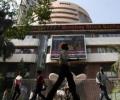
The rally in Indian market is mainly due to resumption of foreign institutional investor inflows.
